
Game On: Making Youth Activities More Accessible
By Jessica Rosencrans on
Youth sports and extracurricular activities offer opportunities for children to stay active, develop new skills, and build friendships. However, required registration fees can create a financial barrier to these programs and prevent low-income families from participating.
Recognizing this barrier, Cavalier County Health District (CCHD) partnered with the Northern Valley Human Service Zone (NVHSZ) to create a program that covers registration fees associated with athletic opportunities for children from low-income families.
In 2026, the program received funding through the Blue Cross Blue Shield of North Dakota (BCBSND) Caring Foundation Rural Health Grants Program, which supports efforts to address social determinants of health in North Dakota communities. The grant program is facilitated by the Center for Rural Health (CRH) at the University of North Dakota School of Medicine & Health Sciences.
Health Is More Than Healthcare
According to the Office of Disease Prevention and Health Promotion, social determinants of health, sometimes referred to as social drivers of health, are the conditions in the environments where people live, learn, work, and play that influence their health and quality of life. Examples of social determinants of health include economic stability, education access and quality, and social and community context.
 "Public health recognizes
the benefits of physical activity in improving short- and
long-term health and preventing disease," Stephanie
Welsh, administrator at CCHD, said. "It was also
identified that physical activities provide additional
benefits of increasing connectedness, building skills,
increasing self-esteem, and providing opportunities for
mentorship."
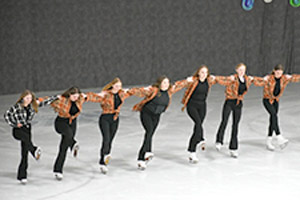
Through CCHD's scholarship program, children in Cavalier County have participated in summer baseball and softball programs, swimming lessons, athletic camps, and sports such as hockey, ice skating, cheerleading, and golf.
Making Participation Possible
For communities looking to implement a similar program, Welsh recommends utilizing processes and ideas that are already in place.
"We chose to partner with Northern Valley Human Service Zone as they had been previously working on a smaller scale to fund pool passes for kids in need. They also already had processes in place to determine financial eligibility, so we didn't have to create any new systems," Welsh shared. "This simplified the project for both the organizations and families who were interested in participating."
Various youth-serving organizations identify potentially eligible children and refer them to NVHSZ, which determines eligibility based on whether their families qualify for one of its income-based assistance programs. Once eligibility is established, the relevant information is sent to CCHD to cover the registration costs.

Kim Rude, an administrator from NVHSZ, emphasized that without this program, several kids in the community would have had to choose only one athletic activity, or be unable to participate entirely due to financial constraints.
"This activity scholarship has opened doors for families in our community," Rude said. "I believe it levels the playing field for students who are from lower-income families and keeps kids active."
It levels the playing field for students who are from lower-income families and keeps kids active.
Children ages 0-18 were eligible to participate in the program, provided that they met the financial requirements. Children as young as preschool age had pool pass fees covered so they could participate in swimming lessons, while older kids participated in school sports, sports camps, and other athletic programs.
"We took a broad approach to the activities that we would cover," said Welsh. "As long as it had a physical element and a registration fee associated with participating, we were able to help."
Supporting the Community One Athlete at a Time
In 2026, BCBSND Caring Foundation Rural Health Grants funding supported 37 athletic activities in Cavalier County. CCHD has also used other funding sources to sustain the program. Over the past five years, these additional funding streams have supported 185 activities.
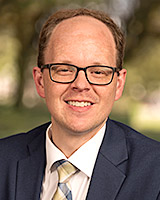
"The Blue Cross Blue Shield of North Dakota Caring Foundation Rural Health Grants Program supports a variety of community-specific programs, allowing each grantee to address a concern that is prevalent in the area," said Jacob Warren, director of CRH. "I am proud that CRH plays a role in supporting these projects that make such an impact in rural North Dakota."
Welsh and Rude said families have expressed deep gratitude for the opportunities the program provides.
The grant allows for more than physical activity; it helps with life skills, a feeling of belonging, and emotional and social health.
"I have worked with many families who have benefited from the grant, and all are so thankful," said Rude. "The grant allows for more than physical activity; it helps with life skills, a feeling of belonging, and emotional and social health."
"Families receiving the support routinely report to social services how much the funding means to their children," Welsh shared. "One mom recently was nearly in tears, saying that the program meant the difference between her kids sitting on the couch all summer break or spending time being active with their peers."
 is the communication specialist with the Center for Rural
Health at the University of North Dakota School of
Medicine & Health Sciences in Grand Forks.
- Share this article:
-

-

-

-
