

The Gateway to Rural Health Research
By Jessica Rosencrans on
Rural Americans face unique challenges regarding healthcare. Driving several hours to see a specialist, navigating winding gravel roads in winter, or living in a region that does not have reliable ambulance service are a few barriers to care that can accompany rural living. Despite these shared experiences, healthcare research can underrepresent rural populations, instead focusing on urban areas with higher population densities.
 The Rural
Health Research Gateway (Gateway) helps address this gap.
Gateway is part of a cooperative agreement (CA) funded by
the Federal Office of Rural Health Policy (FORHP) at the
Health Resources and Services Administration (HRSA).
Gateway and several Rural Health Research Centers (RHRCs)
partner to create and share rural-specific health
research to ensure that the health concerns of rural
America are addressed.
The Rural
Health Research Gateway (Gateway) helps address this gap.
Gateway is part of a cooperative agreement (CA) funded by
the Federal Office of Rural Health Policy (FORHP) at the
Health Resources and Services Administration (HRSA).
Gateway and several Rural Health Research Centers (RHRCs)
partner to create and share rural-specific health
research to ensure that the health concerns of rural
America are addressed.

"Gateway operates as the dissemination wing of the CA," said Per Ostmo, program director of Gateway. "Publications on Gateway are searchable by date, topic, RHRC, and individual researcher, and everything is freely accessible to the public."
Gateway is housed at the Center for Rural Health (CRH), within the University of North Dakota School of Medicine & Health Sciences.
Importance of Open Access
While Gateway operates out of North Dakota, the CA is nationwide and uses national data sets to explore and compare rural and urban health. Likewise, each RHRC is located at a different research university, spread across the country. The RHRC Program is the only federal program that is dedicated entirely to producing policy-relevant research on healthcare in rural areas.

Janessa Graves, director of the WWAMI RHRC, emphasizes the importance of open-access, rural-oriented research.
"Rural policymakers and leaders need evidence that reflects the rural context," she said. "So often, research is conducted in urban or suburban settings and then extrapolated to rural areas, which is far from ideal and potentially harmful."
So often, research is conducted in urban or suburban settings and then extrapolated to rural areas, which is far from ideal and potentially harmful.
Graves continued, "Open access removes the cost barrier that separates decision-makers from research evidence, so a health department, hospital, clinic, program, or school can use our findings directly, rather than encountering them behind an often-expensive paywall."
The eight RHRCs each have their own areas of research specialty, including workforce, maternal health, health insurance and health policy, aging, and mental and behavioral health. Every year, the RHRCs and FORHP collaborate to select new research projects. The resulting products include policy briefs, journal articles, chartbooks, fact sheets, and interactive maps. These research products are archived on the Gateway website and disseminated via Gateway's email list, webinars, social media, and conference presentations and exhibits.
"The idea is that the whole is greater than the sum of its parts," shared Ostmo. "While each RHRC is highly respected individually, being part of the CA and featured on the Gateway website adds another layer of visibility and name recognition to their work."
The idea is that the whole is greater than the sum of its parts.
Ease of access and user experience are priorities for the Gateway program, Ostmo emphasized. Rural health research is valuable, but the research only makes a difference when people can find it and use it.
"While the RHRCs have been operating since the 1980s, Gateway was not established until 2006," he said. "Prior to Gateway, research from the CA was housed on each separate research center's website, meaning users had to search multiple sites, often with different page layouts and navigation. When the Gateway website launched in 2007, users were able to search for research published across all centers in one convenient location."
Sharing the Key Findings
Anyone interested in rural health research can benefit from utilizing Gateway. Many of the publications are policy-oriented and include rural-urban comparisons, which is ideal for policymakers. Students and early-career researchers are another demographic that can find value in Gateway's resources. Gateway's Dissemination Toolkit provides guidelines for research dissemination, including tips for crafting policy briefs and writing abstracts.
As the RHRCs complete their projects, Gateway hosts webinars to allow the researchers to share key findings with a live audience. The most recent webinar, held in June 2026, was presented by the WWAMI RHRC and focused on youth behavioral health prevalence and treatment.
Graves, who was part of a panel of researchers who presented in the June webinar, shares the benefits of these events.
"As presenters, we can draw connections between studies and projects, both within our own RHRC and across others," Graves said. "Participants can see how a project fits into a broader research program and can ask questions directly. Presenting also benefits us as researchers: the questions people ask help us understand which parts of our research are most relevant to decision-makers, and that feedback shapes our future work."
Twenty Years of Gateway
Gateway is approaching a significant milestone – 20 years of hosting rural health research. Alongside this milestone, the grant was also recently renewed for a five-year cycle, lasting until 2031.
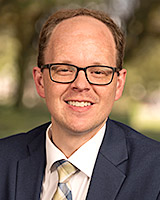
"We are excited to see this grant renewed for another five years," said Jacob Warren, director of the Center for Rural Health. "CRH is proud to house a program that helps bring rural health research to communities, policymakers, and researchers across the country. This renewal allows Gateway to continue connecting people with research that can inform decisions and improve healthcare for rural Americans."
"We are thrilled to continue disseminating critical rural health research," shared Ostmo. "To continue to be successful, Gateway must stay current on best practices for the web, accessibility, and search engine optimization."
Ostmo emphasized that Gateway is more than just a library of federally funded rural health research; it also represents a collection of highly skilled researchers.
"When users visit Gateway, they should not only ask themselves, 'What can I read?' but also ask themselves, 'Who can I talk to about this research?'"
 is the communication specialist with the Center for Rural
Health at the University of North Dakota School of
Medicine & Health Sciences in Grand Forks.
is the communication specialist with the Center for Rural
Health at the University of North Dakota School of
Medicine & Health Sciences in Grand Forks.


